
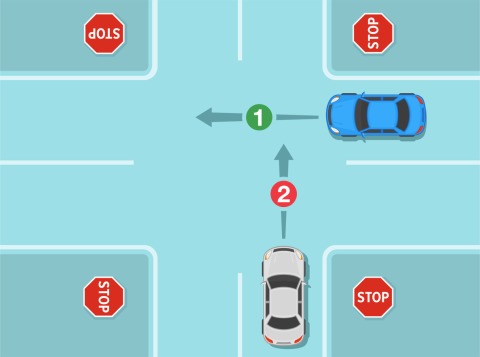
Ever been at a four-way stop, everyone arrived at the same time, and a silent, awkward staring contest ensued? Or perhaps you’ve cautiously inched forward at a yield sign, unsure if that approaching car is actually going to let you merge. These moments are more than just inconvenient; they highlight a critical aspect of driving safety: understanding right-of-way.
Right-of-way dictates who is legally permitted to proceed in a given traffic situation. Misunderstanding or ignoring these rules can lead to collisions, near misses, and frustrating delays for everyone. Far beyond just knowing the rules, understanding the principles and practicing consistent, defensive driving habits in these situations is essential for road safety. It's not just aboutknowingwhoshouldgo first; it’s about making sure everyone is on the same page and avoiding accidents.
Here’s a simple yet powerful habit: When in doubt, yield. A few seconds of hesitation are far better than a potentially life-altering crash. Focus on observing other drivers' intentions, and prioritize clear communication through eye contact and signals when possible.
Understanding the Basics of Right-of-Way
Right-of-way isn't just some arbitrary set of rules; it's a system designed to promote orderly traffic flow and, most importantly, prevent accidents. It's built on a foundation of common sense and predictability, but it requires all drivers to be aware and conscientious. Understanding the underlying principles can make you a safer and more confident driver.
Think of right-of-way as a social contract on the road. We all agree to follow these rules so that we can navigate complex intersections and merging scenarios safely. When someone breaks that contract, it creates confusion and potential danger.
The General Rule: First Come, First Served
At an uncontrolled intersection (one without stop signs or traffic signals), the general rule is that the vehicle that enters the intersection first has the right-of-way. This seems simple enough, but it requires careful observation and judgment. You need to be able to accurately assess when another vehicle is approaching and determine who arrived first.
Slow down and scan: Always approach uncontrolled intersections with caution. Reduce your speed and carefully scan for approaching vehicles. Assess their speed and distance: Judge the other vehicle's speed and distance to determine who will likely reach the intersection first. Yield if necessary:If you're unsure or if the other vehicle is clearly closer, yield the right-of-way.
Right Turns vs. Left Turns
One of the most common right-of-way situations involves turning. When making a left turn, you generallymustyield to oncoming traffic. This means waiting until there is a safe gap in traffic before proceeding. Right turns, on the other hand, generally have the right-of-way, but only after yielding to pedestrians and any other traffic already lawfully in the intersection.
Left Turns: Yield to oncoming vehicles, bicycles, and pedestrians. Only turn when it is safe to do so without causing other vehicles to slow down or stop. Right Turns: Yield to pedestrians in crosswalks and any vehicles already in the intersection.
Navigating Common Right-of-Way Scenarios
While the basic principles of right-of-way are straightforward, applying them in real-world scenarios can be more complex. Let's look at some common situations where right-of-way can be confusing.
Four-Way Stops
As mentioned earlier, four-way stops can be particularly challenging. Here's the breakdown:
1.First to Arrive: The vehicle that arrives at the intersection first has the right-of-way.
2.Simultaneous Arrival: If two or more vehicles arrive at the same time, the vehicle on therighthas the right-of-way.
3.Straight vs. Turning: If vehicles arrive simultaneously, a vehicle going straight has the right-of-way over a vehicle turning left.
4.Communication is Key: Use your turn signals to indicate your intentions and make eye contact with other drivers to ensure they understand your plan.
Example: Two cars arrive at a four-way stop simultaneously. Car A is going straight, and Car B is turning left. Car A has the right-of-way. If both cars were going straight, and Car A was to the right of Car B, then Car A would have the right of way.
Yield Signs
A yield sign means you must give the right-of-way to traffic on the intersecting road. You should slow down and be prepared to stop if necessary. Only proceed when it is safe to do so without causing other vehicles to slow down or change course. Think of it as mergingresponsibly.
Observe Traffic: Pay close attention to the speed and flow of traffic on the intersecting road. Merge Smoothly: Accelerate to match the speed of traffic before merging. Don't Force Your Way In:If there is no safe gap in traffic, wait until one appears.
Merging onto Highways
Merging onto a highway requires careful planning and execution. You need to accelerate to match the speed of traffic and find a safe gap to merge into. This can be especially tricky during rush hour when traffic is heavy.
Use the Acceleration Lane: Use the acceleration lane to build up speed before merging. Match Traffic Speed: Adjust your speed to match the speed of traffic on the highway. Signal Your Intentions: Use your turn signal to indicate your intention to merge. Find a Gap: Look for a safe gap in traffic and merge smoothly into the flow. Be Prepared to Adjust:If you can't find a safe gap, be prepared to adjust your speed or even stop at the end of the acceleration lane.Neverstop in the travel lanes of the highway.
Roundabouts
Roundabouts are designed to improve traffic flow and reduce accidents. Vehicles entering the roundabout must yield to traffic already in the circle.
Yield to Traffic in the Roundabout: Always yield to vehicles already circulating in the roundabout. Enter When Safe: Enter the roundabout when there is a safe gap in traffic. Signal Exiting: Use your turn signal to indicate when you are exiting the roundabout. Stay in Your Lane: Maintain your lane position while driving through the roundabout.
Advanced Right-of-Way Considerations
Beyond the basic rules, there are some more nuanced aspects of right-of-way that experienced drivers should be aware of. These considerations involve anticipating the actions of other drivers and adjusting your behavior accordingly.
Pedestrians' Right-of-Way
Pedestrians always have the right-of-way in crosswalks, whether marked or unmarked. Drivers must yield to pedestrians and exercise caution to avoid collisions. This is especially important in areas with high pedestrian traffic, such as school zones and downtown areas.
Be Extra Vigilant: Pay extra attention to pedestrians, especially children, the elderly, and those with disabilities. Yield at Crosswalks: Always yield to pedestrians in crosswalks, even if they are not yet in your lane of travel. Avoid Distractions:Put away your phone and avoid other distractions that could impair your ability to see pedestrians.
Emergency Vehicles
When an emergency vehicle approaches with its lights and sirens activated, you must yield the right-of-way. Pull over to the right side of the road and stop until the emergency vehicle has passed. On multi-lane highways, move to the far right lane if possible, leaving the lane closest to the shoulder open. Never try to outrun an emergency vehicle.
React Quickly: When you hear sirens or see flashing lights, react quickly and safely. Pull Over to the Right: Pull over to the right side of the road and stop. Stay Put:Remain stopped until the emergency vehicle has passed.
School Buses
When a school bus has its red lights flashing and stop arm extended, you must stop in both directions, unless you are on a divided highway with a median separating traffic. Wait until the lights stop flashing and the stop arm is retracted before proceeding. This is a critical safety rule designed to protect children getting on and off the bus.
Stop for Flashing Red Lights: Always stop when a school bus has its red lights flashing. Watch for Children: Be extra vigilant for children near school buses, as they may be crossing the road. Obey the Stop Arm:Never pass a school bus with its stop arm extended.
Construction Zones
Construction zones often involve temporary traffic patterns and reduced speed limits. Drivers must exercise caution and follow the directions of flaggers and signs. Right-of-way can be altered in construction zones, so it's important to pay close attention to the specific instructions provided.
Reduce Speed: Slow down and obey the posted speed limits in construction zones. Follow Flagger Instructions: Obey the directions of flaggers, as they have the authority to direct traffic. Be Aware of Changes:Be aware of changes in traffic patterns and lane closures.
Defensive Driving Habits and Right-of-Way
Understanding right-of-way is only part of the equation. Practicing defensive driving habits is essential for preventing accidents and ensuring road safety. Defensive driving involves anticipating the actions of other drivers, being aware of your surroundings, and making safe decisions behind the wheel.
Maintaining Situational Awareness
Situational awareness is the ability to perceive and understand your surroundings and anticipate potential hazards. This involves constantly scanning the road ahead, checking your mirrors, and being aware of the position of other vehicles.
Scan the Road Ahead: Look far ahead to identify potential hazards, such as pedestrians, cyclists, and other vehicles. Check Your Mirrors Regularly: Check your mirrors every few seconds to monitor the position of vehicles around you. Be Aware of Blind Spots:Be aware of your vehicle's blind spots and check them before changing lanes or making turns.
Anticipating Other Drivers' Actions
One of the keys to defensive driving is anticipating the actions of other drivers. This involves paying attention to their behavior and making educated guesses about their intentions. Are they signaling? Are they slowing down? Are they drifting into your lane?
Watch for Signals: Pay attention to turn signals and brake lights. Observe Behavior: Watch for erratic or unpredictable behavior. Assume the Worst:Assume that other drivers may not follow the rules of the road.
Managing Space Around Your Vehicle
Maintaining adequate space around your vehicle is crucial for avoiding collisions. This gives you time to react to unexpected events and maneuver safely.
Follow the Three-Second Rule: Maintain at least three seconds of following distance between your vehicle and the vehicle in front of you. Increase Following Distance in Bad Weather: Increase your following distance in rain, snow, or fog. Avoid Tailgating:Never tailgate another vehicle.
Final Thoughts
Mastering the rules of right-of-way and embracing defensive driving habits takes time and consistent effort. Don't get discouraged if you occasionally find yourself in confusing situations. The important thing is to learn from your experiences and continue to improve your skills. With practice and dedication, you can become a safer and more confident driver. Remember, a calm and patient approach contributes greatly to a positive and safe driving environment for everyone. Keep practicing these safe driving tips, and you’ll navigate those tricky intersections with confidence in no time.